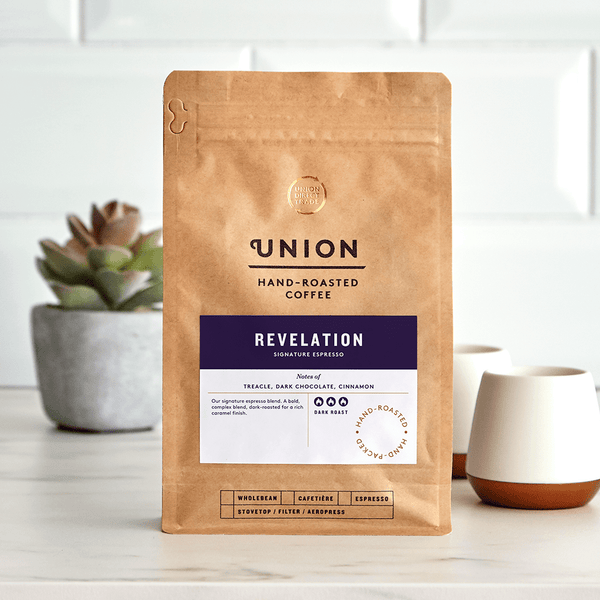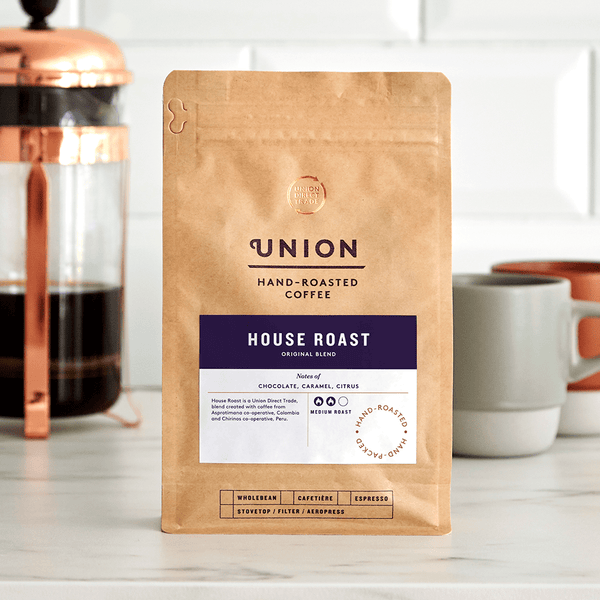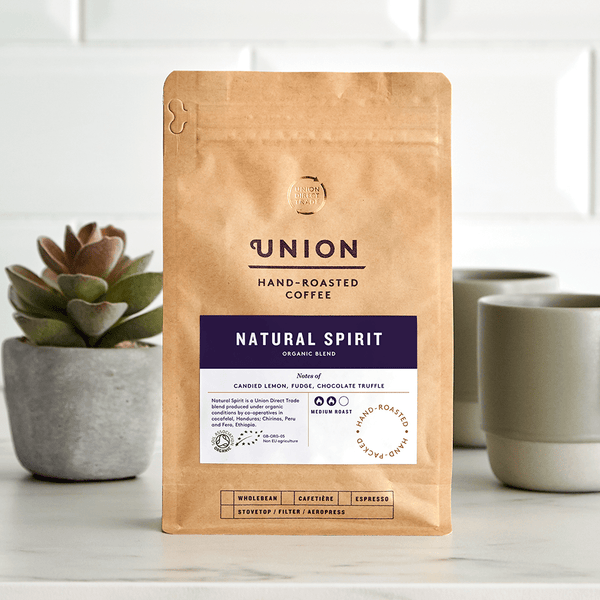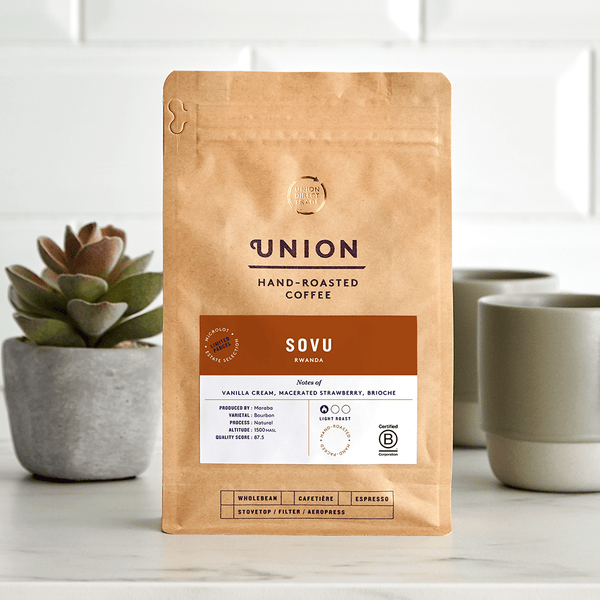

Coffee
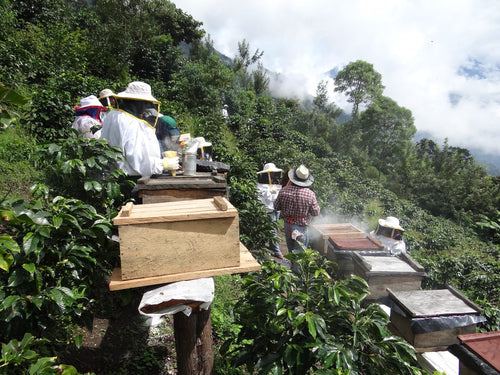
We want coffee from Union to make you eager to know more about what’s in your cup; where this coffee is from, who produces this coffee, artisan roasted coffee, coffee flavour profile, brewing and enjoying coffee. We roast our coffee every day, selected from small estate coffee farm and smallholder coffee co-operatives. We travel considerably to visit these farmers to learn about the coffee they grow and the coffee we select; the environment, altitude, varietal and post-harvest coffee processing. We seek insight into improving labour standards for coffee farm workers and achieving sustainable livelihoods for coffee farmers.
Union is all about giving appreciation to the coffee farmer as an artisan and pairing their best work with ours, the craft of coffee roasting.
Fair Trade coffee:
We’re a bit schizophrenic when it comes to Fair trade coffee. The Fairtrade mark was created as a consumer label that guarantees producers get a minimum price for their goods and work. Fair Trade coffee was created to offer a price safety net for commodity grade coffee. But at Union we don’t just buy Fair Trade coffee, we source specialty coffee of the highest qualities which command a significant premium above the Fairtrade coffee price. But we recognise that UK consumers are highly sensitised to the Fair trade coffee logo. To produce Fairtrade coffee, smallholder farmers belong to a democratically elected organised Co-operative. They are inspected against international standards, defined by Fairtrade Labelling Organizations (FLO). Buyers pay a minimum price to Fair trade coffee certified producers for coffee that is sold under Fair trade coffee conditions. Not all a certified producers' crop is necessarily sold as Fair trade coffee. For smallholder farmers to remain working in Fair Trade coffee, are required to pay an annual inspection fee to FLO which audits production volumes, labour standards and provides verification of the financial transparency for Fairtrade coffee sales. Buyers can elect to include an optional USD$0.10/Lb green fair trade coffee premium for investment in social or economic development projects for the community to undertake. Union includes this Fairtrade coffee social premium in purchasing contracts. Union pays a fixed percentage of sales to the Fairtrade Foundation UK to support Fair Trade coffee marketing activity. The Foundation is not a development agency. For more discussion on Fairtrade coffee and to learn about our Direct Contact Trade programme.
Espresso coffee
We think Espresso coffee requires a well crafted coffee blend to produce a harmonious espresso coffee balance; allowing delicate flavours to be heard clearly among more forward prominent taste notes. A well crafted espresso coffee blend is a combination of coffees that together are greater than their parts. The mastery of creating an espresso blend is discovering coffees that play well off each other and accentuate flavours. We seek coffees that work together to create new flavours as well as flavours that modify as the espresso shot develops and the temperatures change. The art of crafting our superior and consistent espresso blends continues to excite us. To achieve consistency in the flavour profile of our espresso blends we constantly taste and adjust our recipes to maintain the espresso coffee character. Single origin espresso coffee (defined farm and lot) can produce delicious shots. Espresso coffee created from a single bean type may yield a more consistent espresso coffee flavour profile and may differ in the over-layering of waves of flavour compared to an espresso coffee blend. We create the ingredients for you to seek the espresso coffee that excites you.
Arabica coffee
(coffea arabica), one of the two main species of coffee trees produced commercially, accounts for up to 80% of the world production. Arabica is different from Robusta in that it produces a superior tasting cup and has lower caffeine content. We only source Arabica and even within the Arabica species we also seek those Arabica cultivars that produce a noteworthy cup, and avoid Arabica varietals cultivated for their high yield, resistance to disease but fail to delight in the cup. Heirloom Arabica coffee varietals are favoured.
Filter coffee
is delicious and interesting. With filter coffee brewing methods (non-espresso) we are encouraging a diverse and note-worthy coffee culture. There have been a variety of different filter coffee methods, like siphon, chemex and filter drippers for many years, but these are going through a modernization. Filter coffee has undergone a public interest transformation that allows you to work with coffees, traceable to the farmer and give credit to the ingredient rather than the technical skill of the person preparing the filter coffee brewing. The joy from filter coffee prepared from single drippers allows you to brew a single mug of fresh filter coffee for (almost) immediate gratification. Filter coffee also suitable for work place with bulk brew filter coffee systems and portions for filter coffee available.
Roasted coffee
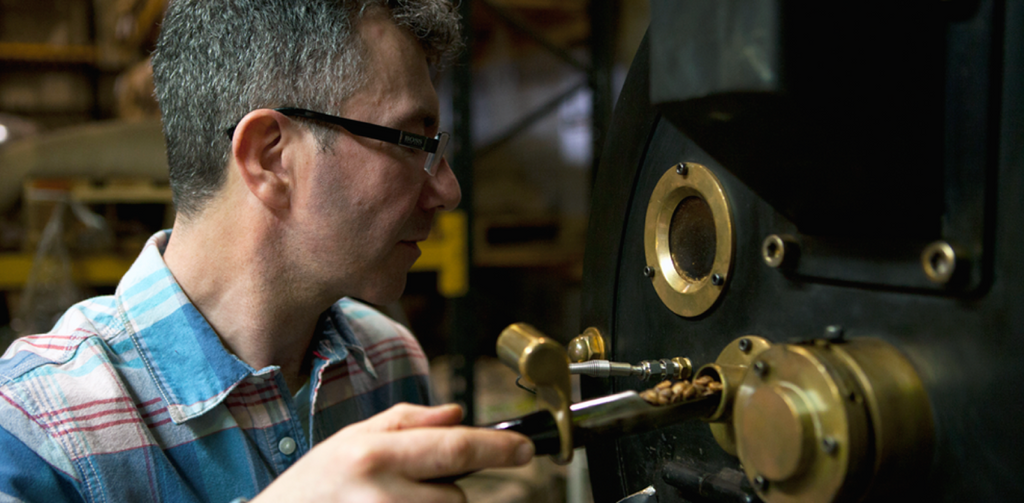
Our roasted coffee is distinctive; skilfully crafted to develop the intrinsic flavour profile and natural sweetness. Every day we pursue our art of coffee roasting to produce fresh roasted coffee for you. We understand that coffee from each farm we source from is unique and must be considered individually to produce exquisite roasted coffee.
Creating perfect roasted coffee is a craft that demands constant attention to the coffee. Using experience and a steady touch, adjusting the flame of the coffee roaster to ensure each batch achieves optimum development of flavour from our premium Arabica beans.
Speciality coffee:
Speciality coffee is hand crafted high quality Arabica coffee, which is identified with a unique quality, a distinct taste and character superior to common commodity grade coffee. Speciality coffee is created from beans grown in a geographically defined area that are cultivated with meticulous attention to detail to achieve the highest standards at every stage beginning at the farm and through to the cup.
To define speciality coffee is a call to action for everyone passionate about coffee excellence. Many factors influence the creation of specialty coffee. It starts with the rich nutrients in soil because this is where quality is created; the collaboration of micro-climate, soil type, elevation, amount of sun, rainfall, tree varietal together create specialty coffee. We work with farmers who understand how they can influence and craft the highest quality of specialty coffee we seek.
Artisan coffee.
We created artisan coffee in small batches from our San Franciscan coffee roaster. Our traditional micro-roasting develops the peak flavour profile, individual subtleties and aromatic pleasures unique to each cultivar of our artisan coffee. This detail is the artistry that gets Union a little closer to perfection We could not live in a world without artisan coffee.
Fresh coffee
excites us.
Fresh green Arabica Coffee:
We select new season fresh coffee crops and ship them to the Port of Tilbury, 30 minutes truck from our roasting. To protect our fresh coffee when its green (unroasted) on its journey we use new packaging methods, like vacuum packaging and GrainproTM. The exquisite coffees that we’ve extensively cupped at the producers cupping laboratory before purchasing must be carefully defended against moisture variation that occurs during shipping. We base our purchases on how much fresh coffee we forecast to sell and how long we can store this so you enjoy our fresh coffee at its peak of flavour. Green coffee will deteriorate if stored incorrectly, before the new season fresh coffee crop arrives.
Fresh Arabica roasted Coffee:
Our fresh roasted coffee excites us too. We roast your coffee to order and pack fresh coffee within 2 hours of roasting to capture the volatile aromatics within the bag before these transcend into the atmosphere. You receive fresh coffee within two days of roasting.
Fresh Arabica roasted coffee at Home:
We recommend you store your fresh coffee carefully at home. Keep it away from strongly odoriferous foods. Coffee is hygroscopic (absorb moisture) and will deteriorate in a damp environment like a fridge. But (controversially) we think freezers are good. Cold temperature closes down the volatile aromatics and keeps you in stock with fresh coffee. Grind straight from the freezer, there is no need to thaw. But only take out what you need, rapidly replacing the rest of the bag before condensation and moisture get hold. Don’t abuse your fresh coffee.